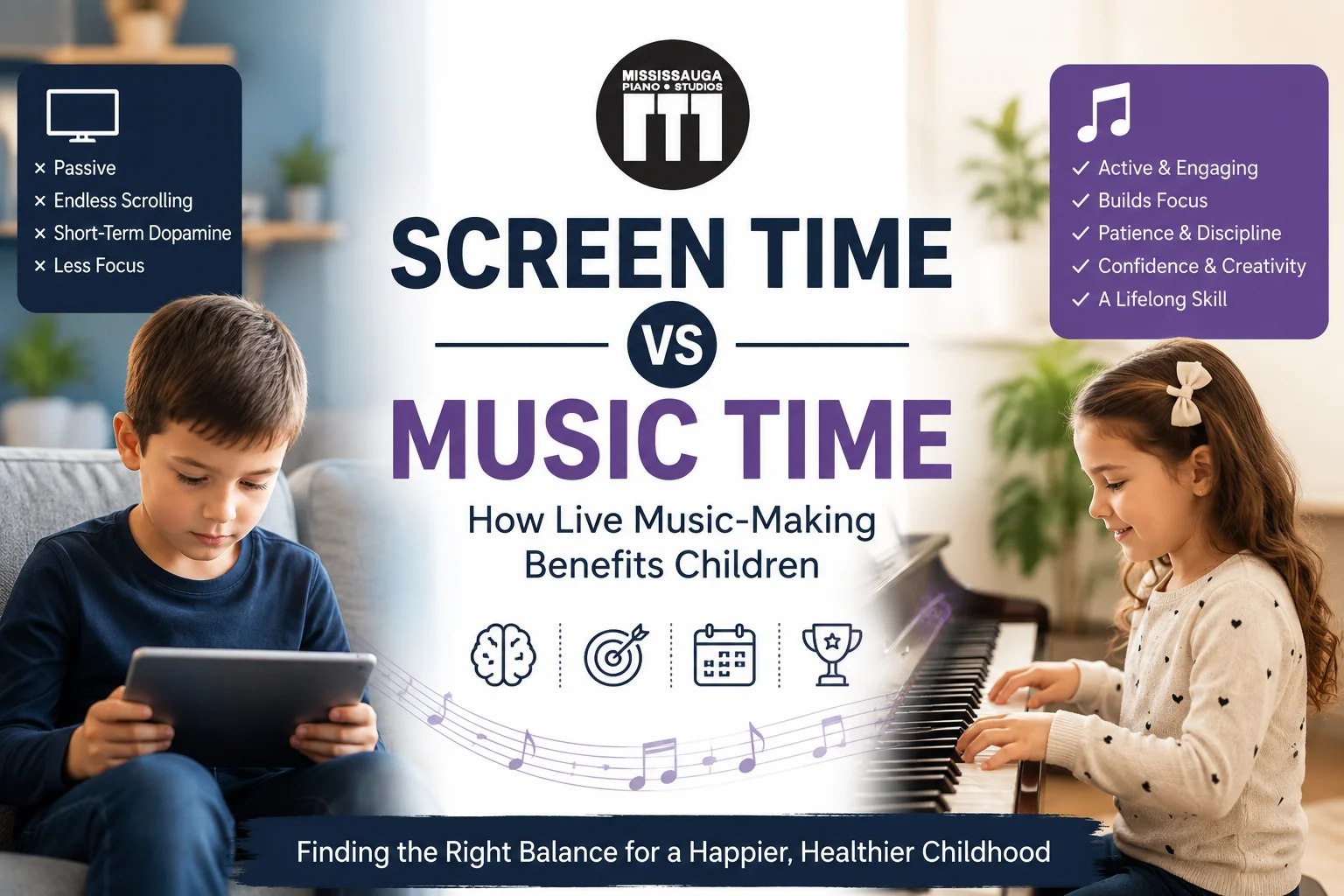
After school is over, children simply leave their backpacks at the door and grab the tablet. The time spent on the tablet could quickly turn into an entire hour or more. Screens are now a regular aspect of childhood, providing education, fun, and social connections. But the bigger issue is the way children split their time.
For families considering Piano lessons Mississauga, music can provide a useful alternative to unstructured device use. Unlike passive scrolling, playing an instrument asks children to participate. The children practice, fail, listen, adapt, and then gradually see their progress. The result is that music lessons vs screen time for kids is not much about picking one over the other, but more about finding the right balance.
Screen Time Is Not Always the Problem
Screens do not automatically represent a negative activity. Educational apps can support math, reading, problem-solving, and drawing tools. Drawing software, programming platforms, as well as video-making can inspire the imagination of children. Video calls also can aid children in maintaining friendships with their family and friends.
The important distinction involves quality, context, and balance. Watching a carefully selected documentary differs from endlessly scrolling short videos. Creating something on a device differs from passively consuming content for hours.
Research also does not support one simple conclusion about screen use for every child. The kind of activity, as well as the frequency of usage and the circumstances, are all important. Parents aim to decrease routine screen use instead of judging every online game as hazardous.
What Live Music-Making Adds to a Child’s Day
Playing an instrument creates an active learning experience. Children use their hands, ears, eyes, and attention at the same time while following musical patterns and instructions.
A structured lesson also gives children a clear progression. It could begin with the basics of skills and notes. They can then progress to full pieces, exams, or performances when their abilities improve. The structured programs can be based on recognized standards for music education. They can give students measurable objectives instead of practicing in a completely unplanned manner.
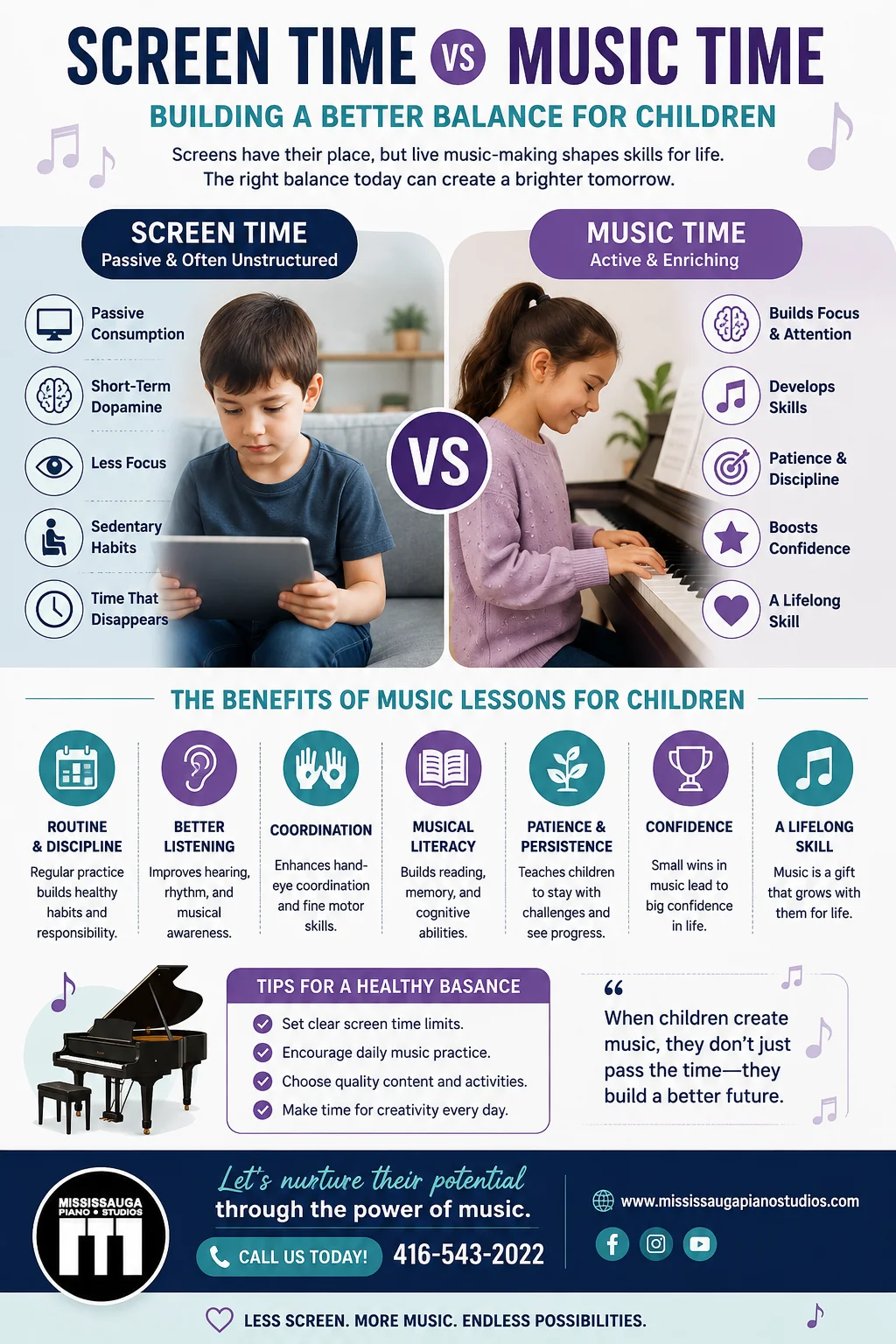
The benefits of music lessons for children can include:
- Regular practice and routine
- Listening and rhythm skills
- Hand-eye coordination
- Musical literacy
- Patience and persistence
- Confidence through gradual improvement
- A lasting skill children can continue developing
This does not mean every lesson produces the same result for every child. Interest, teaching quality, practice habits, and age all influence the experience.
How Music Practice Builds Focus and Patience
An instrument rarely sounds polished on the first attempt. If kids struggle in a brief phrase today, then practice over the next few days will make them play it easily after a couple of days. The process imparts the importance of improvements often made through tiny and repeated effort.
Children also need to concentrate on several details while playing. They may read notes, follow rhythm, remember patterns, control technique, and listen to the sound they produce. This sustained attention differs from the rapid switching that often occurs during recreational device use.
Music education has also been associated in some research with areas such as working memory and reading ability, and piano lessons in particular have been linked to brain development in children. However, findings vary between studies and populations, so music should not be presented as a guaranteed academic shortcut.
More simply, how music lessons improve focus and discipline often comes down to practice itself. Children learn to stay with a task even when it feels difficult.
Music Lessons Offer Something Screens Cannot
Children can view hundreds of live performances and not even learn the instrument. The act of watching can spark curiosity. However, playing transforms that curiosity into action.
The teacher can also add another crucial aspect: instant, personalized feedback. A teacher can spot mistakes, reduce an area that is difficult, show an approach, and modify teaching to the student’s abilities. In an age of AI-powered learning tools, why human guidance still matters becomes especially clear here. A teacher who stays consistent will be a great mentor who recognizes the development of the child over the course of time.
Digital music content still has a place. Kids can enjoy shows, experiment with the various styles of music, and use suitable digital tools for practicing. What is different is what happens after the display goes off. Instead of just listening to music, kids get an opportunity to create music.
Choosing an Instrument That Matches the Child
There’s not a single ideal instrument that is suitable for each young child. The ideal choice will depend on the child’s personality, interests, physical and psychological comfort, as well as the kind of music or play that naturally entices them.
For example:
- Piano: Mississauga Piano Studios are the ideal option for children who enjoy melody, patterns, and structured progression. Parents can also explore the best way to learn piano for tips on getting started.
- Flute: May appeal to children interested in wind instruments and breath-based playing.
- Drums: Suitable for children who are naturally drawn to the rhythm of their movements, beats, and the energetic patterns of music.
- Guitar: Provides a useful way to study the chords, melodies, and various types of music. Still deciding between the two? Our guide on piano vs guitar first breaks down the differences.
- Violin or cello: May suit kids who like expressive melodies and string instruments.
- Vocals: An ideal option for kids who are already enthusiastic about singing and performing.
A wide music program gives families many possibilities, like the guitar, piano, vocals, and drums. Parents should consider choosing the right musical instrument for a child based on genuine passion, not on popularity or respectability. The joy of playing gives kids a greater motivation to practice.
What About Time, Practice and Family Schedules?
Music lessons require a real commitment. The lesson itself represents only part of the process because children need regular practice to build confidence and retain new skills.
That does not mean practice needs to become a lengthy daily chore. Small, concentrated sessions could work better within a daily routine for families rather than sporadic marathon sessions. Consistency is more important than making each practice session lengthy.
Parents should take into consideration the current schedule of their child. If homework, school, or sports, as well as other pursuits, take up the majority of afternoons, any additional commitment could cause an unnecessary burden.
Flexible scheduling can help. Some music programmes provide weekday and weekend lessons, along with in-person, in-home, and virtual formats. For families considering drum lessons in Mississauga, for example, the schedule should work for both the child’s interest and the household routine.
Can Children Have Both Music and Screen Time?
Yes. In most families, the goal does not need to involve eliminating screens completely.
Children can have time for schoolwork, creative technology use, entertainment, physical activity, music, family interaction, and unstructured play. Music can simply take the place of some screen time that would otherwise happen automatically.
A weekly lesson combined with manageable home practice creates a predictable activity. Technology can also support music learning through recordings, demonstrations, and suitable practice tools.
The more useful question becomes: What is your child getting from those hours?
Intentional screen use can provide value. Intentional music practice can build a skill. Automatic scrolling often provides much less.
What Parents Should Look For in a Music School
Choosing a teacher or school deserves as much thought as choosing an instrument. A good learning environment can influence whether a beginner develops confidence or loses interest.
Parents can look for:
- Qualified and experienced instructors
- Teaching methods suited to the child’s age and ability
- Personalised lesson plans
- Beginner and advanced learning options
- Flexible lesson formats
- Opportunities for recitals, concerts, auditions or examinations
- A supportive teacher-child relationship
- An introductory or trial lesson
A programme guided by recognised standards can also give children a clear path as they progress. The reference programme offers certified instructors, personalised instruction, flexible formats, trial lessons, and preparation for music examinations and performances, including guidance on what is a good RCM exam score as students advance through the levels.
For parents comparing piano school Mississauga options, these practical details often matter more than choosing the school with the longest list of promises. It’s part of why piano lessons are gaining popularity in Mississauga among local families.
The Real Benefit: Replacing Passive Time With Purposeful Practice
Screen time can have value, but it can also expand when children have nothing else planned. Music gives some of that free time a structure and a measurable purpose.
A child practises something challenging, receives feedback, and eventually produces something they can perform. Along the way, they may develop focus, patience, listening skills, confidence, and consistency.
Still, children do not need every minute scheduled for productivity. Rest, play, imagination, and downtime matter too. Music works best as one meaningful part of a varied childhood.
Make Room for Music Without Making It a Battle
Parents are not required to pick between a screen-free and limitless device usage. A healthier approach gives children different ways to spend their time.
It is unique because children are actively creating rather than just consuming. Through practice, they learn and receive feedback on their own and develop a talent that is developed over time.
An instrument, a teacher, and a program can make the experience enjoyable rather than making it a source of stress. Begin by focusing on what the child is interested in, how it fits into the family routine, and what type of environment for learning keeps children engaged.
Children who are taught how to compose music don’t just spend less time on the screen. They can be creative, listen, and express themselves, all while growing.
FAQs
Is music better than screen time for children?
It's not always the case in all situations. The use of screens can help education and creative thinking, and music offers an organized practice environment, physical engagement, as well as measurable improvement. An appropriate routine can give youngsters the chance to enjoy both technological use and active activities.
When should children start learning music?
Children may begin their lessons when they show interest and are able to comfortably participate in the task. A few programs teach young children through musical games that are fun for them. Private instrumental lessons might be suitable for children who adhere to the instructions and practice regularly.
Do piano lessons in Mississauga require daily practice?
Regular repetition helps children achieve steady improvement. However, it shouldn't turn into a daily routine. Small, targeted sessions typically work well, especially as parents assist children in developing the habit of a regular and organized routine.
Can music lessons reduce passive screen habits?
Yes. Beginning students can take flute lessons on breathing, posture, as well as basic concepts of music at a suitable speed. A teacher who is supportive can aid in determining whether the flute fits your child's needs and interests as well as their learning style.
Are flute lessons Mississauga suitable for beginners?
Yes. Beginners can learn flute when an instructor introduces breathing, posture, technique, and basic musical concepts at an appropriate pace. A supportive teacher can also help determine whether the instrument matches the child's interests and learning style.