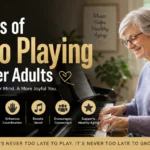
Learning to play piano offers older adults a powerful way to support healthy aging while enjoying a rewarding new hobby. The benefits of piano playing for older adults reach far beyond music, touching brain health, physical coordination, emotional well-being, and social connection.
Piano lessons in Mississauga welcome adults of every age and skill level, and it truly is never too late to start. You do not need any prior musical experience to succeed. This guide walks you through the cognitive, physical, emotional, and social advantages of learning piano later in life, along with practical tips to help you begin your musical journey with confidence.
What Are the Benefits of Piano Playing for Older Adults?
Piano playing improves brain health, strengthens memory, and sharpens hand-eye coordination. It reduces stress, builds confidence, and supports emotional well-being. Piano also encourages lifelong learning and creates opportunities for social interaction through group lessons and recitals. Research links regular piano practice to stronger working memory and slower age-related cognitive decline. For older adults,learning music from scratch as an adult is a simple, enjoyable way to keep the brain active, the body coordinated, and the mind at ease, all while building a skill that grows richer with every practice session.
Why Is Piano an Excellent Hobby for Older Adults?
Piano stands out as one of the best hobbies for healthy ageing because it welcomes learners at any age and adapts to any pace. Learning piano as an older adult does not require rushing. You set your own goals, track your own progress, and celebrate small wins along the way. Each note learned builds toward personal achievement, and each song mastered becomes a source of pride. Playing piano in retirement gives structure to free time while stimulating the brain in ways few other hobbies can match. It combines creativity with discipline, offering a fulfilling outlet that grows more rewarding the longer you stick with it. Piano suits older adults because it is flexible, self-paced, and mentally stimulating, making it one of the strongest choices for a rewarding retirement hobby.

Cognitive Benefits of Piano Playing
Piano and brain health are closely connected. Playing piano benefits your brain by activating multiple regions at once, strengthening memory and working memory as you recall notes, rhythms, and finger positions. This mental workout supports brain plasticity, helping the brain form new neural pathways even later in life. Reading sheet music sharpens executive functioning by requiring quick decision-making and constant concentration. Musicians must process visual information, translate it into finger movements, and adjust in real time, a task that keeps the mind agile. Some studies suggest this kind of consistent brain stimulation may help lower the risk of age-related cognitive decline and support long-term brain resilience. For older adults concerned about memory and mental sharpness, the piano offers an engaging, enjoyable way to keep the brain active every single day. Piano stimulates memory, decision-making, and brain plasticity, making it a valuable tool for supporting long-term cognitive health.
Physical Benefits of Learning Piano
Piano improves coordination by training both hands to work independently yet in sync. This builds fine motor skills and finger coordination, which support everyday tasks like buttoning a shirt or writing by hand. Hand-eye coordination improves as you read notes on the page and translate them into precise finger movements at the keyboard. Regular practice can also sharpen reaction time, since quick responses are needed to keep tempo and rhythm steady. Good posture at the piano bench encourages better spinal alignment, while repeated practice builds dexterity that benefits overall hand strength and flexibility. These physical gains connect to some of the10 things you should know about the piano before you even sit down to play. These physical gains happen naturally through enjoyable practice, without ever feeling like a workout. Piano practice strengthens fine motor skills, hand-eye coordination, and dexterity, supporting better physical control in daily life.
Emotional and Mental Health Benefits
Piano reduces stress by giving the mind a calming focus point away from daily worries. Playing music releases dopamine, the brain’s feel-good chemical, which lifts mood and creates a genuine sense of accomplishment after every practice session. This makes piano an effective, natural approach to easing anxiety and supporting mental well-being. Many older adults find that sitting down at the piano becomes a mindful ritual, a few quiet minutes each day dedicated entirely to themselves. As skills improve, so does confidence. Learning a new piece from start to finish proves that growth is always possible, no matter your age. These emotional benefits of piano playing often become just as meaningful as the musical skills themselves, offering a steady source of joy and personal pride. Piano playing eases stress and anxiety while building confidence and emotional well-being through daily practice and steady progress.
Social Benefits of Piano Playing
Piano brings people together. Group lessons introduce older adults to fellow learners who share the same passion, creating friendships built around a common goal. Recitals offer a chance to perform, celebrate progress, and receive encouragement from an audience of peers and family. Piano can also strengthen family bonds, whether through playing duets with grandchildren or sharing favorite songs at gatherings. These social benefits of learning piano combat isolation, a common concern during retirement, by keeping older adults engaged with a supportive community. Beyond the music itself, these connections add real value to everyday life and make the learning journey far more enjoyable. Piano lessons create social connections through group classes, recitals, and family bonding, helping older adults stay engaged with others.
How to Start Learning Piano Later in Life
Getting started is simpler than most people expect. Follow these six steps to begin with confidence:
- Choose a qualified piano teacher who has experience working with adult and senior beginners.
- Set realistic learning goals based on your interests, whether that means playing a favorite song or learning music theory basics.
- Practice consistently, even if it is just fifteen to twenty minutes a day.
- Learn at your own pace, without comparing your progress to anyone else.
- Celebrate progress, no matter how small each milestone may seem.
- Stay motivated by choosing songs you genuinely enjoy playing.
Beginner-friendly piano lessons for adults and seniors are designed around exactly this kind of steady, encouraging progress. Daily practice paired with consistency builds skill far faster than occasional long sessions. Start piano by finding a qualified teacher, setting realistic goals, and practicing consistently at a comfortable, self-directed pace.
Why Choose Professional Piano Lessons?
Professional piano lessons in Mississauga give older adult learners personalized instruction tailored to their goals and pace. A skilled piano teacher corrects technique early, preventing habits that slow progress later on. Structured lessons keep learners motivated through clear milestones and regular feedback, both of which lead to faster, more confident progress. Rather than guessing at technique through online videos, working with a professional means every practice session builds on a solid foundation. This structured support makes the entire learning experience smoother and far more enjoyable from the very first lesson. Professional piano lessons offer personalized instruction and structured feedback, helping older adults progress faster and with more confidence.
Is It Ever Too Late to Learn Piano?
It is never too late to learn piano. This common myth holds many people back, but scientific evidence shows the adult brain remains capable of learning new skills well into later life. Adults often learn piano faster in some respects than children, since they bring patience, discipline, and clear motivation to every lesson. Motivation matters more than age when it comes to musical success. Many students begin learning piano after retirement and go on to perform confidently within just a year or two of steady practice. Age is not a barrier to learning piano, a point thispiano for adults article makes clear. Motivation and consistent practice matter far more than the age you start. Motivation and consistent practice matter far more than the age you start.
Conclusion
The benefits of piano playing for older adults span cognitive, physical, emotional, and social wellbeing, making it one of the most rewarding hobbies available at any stage of life. Learning piano is possible at any age, and with consistent practice and professional instruction, real progress happens faster than most people expect. Piano Lessons in Mississauga offers a welcoming, supportive environment where adults and seniors receive personalized instruction designed around their goals. Mississauga Piano Studios is trusted throughout the community for beginner-friendly lessons that make older adults feel comfortable from their very first class. Do not let age hold you back. Book a lesson today and discover just how rewarding it is to finally play the songs you have always loved.
Frequently Asked Questions
Is it too late to learn piano after the age of 60?
No, it is never too late. Adults of any age can learn piano successfully with consistent practice and patient, structured instruction.
How does piano playing improve brain health?
Piano strengthens memory, decision-making, and brain plasticity by engaging multiple brain regions simultaneously during every practice session.
How often should older adults practice piano?
Fifteen to twenty minutes of daily practice builds steady progress. Consistency matters more than long, infrequent practice sessions.
Can learning piano help reduce stress and anxiety?
Yes, playing the piano releases dopamine and provides a calming, focused activity that naturally eases stress and anxiety.
Are piano lessons suitable for complete beginners over 50?
Yes, beginner-friendly lessons are designed specifically for adults with no prior musical experience, at any age.