Introduction
Artificial intelligence is transforming how people learn new skills, including music. Today, AI Piano Learning platforms offer interactive lessons, instant feedback, progress tracking, and flexible practice options that appeal to busy students and families. While these tools provide convenience, they have also raised an important question: can technology replace traditional music instruction?
For students seeking piano lessons in mississauga, the answer involves more than learning the correct notes. Piano education requires creativity, discipline, musical expression, and personal mentorship. Private Piano Lessons continue to play a vital role because learning music is a deeply human experience. While AI can support practice and reinforce concepts, it cannot fully replicate the guidance, encouragement, and expertise of an experienced instructor. This article explores the strengths and limitations of AI, the benefits of human instruction, and how students can choose the most effective path for long-term musical success.
Can AI Replace a Piano Teacher?
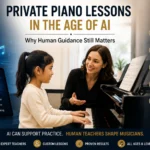
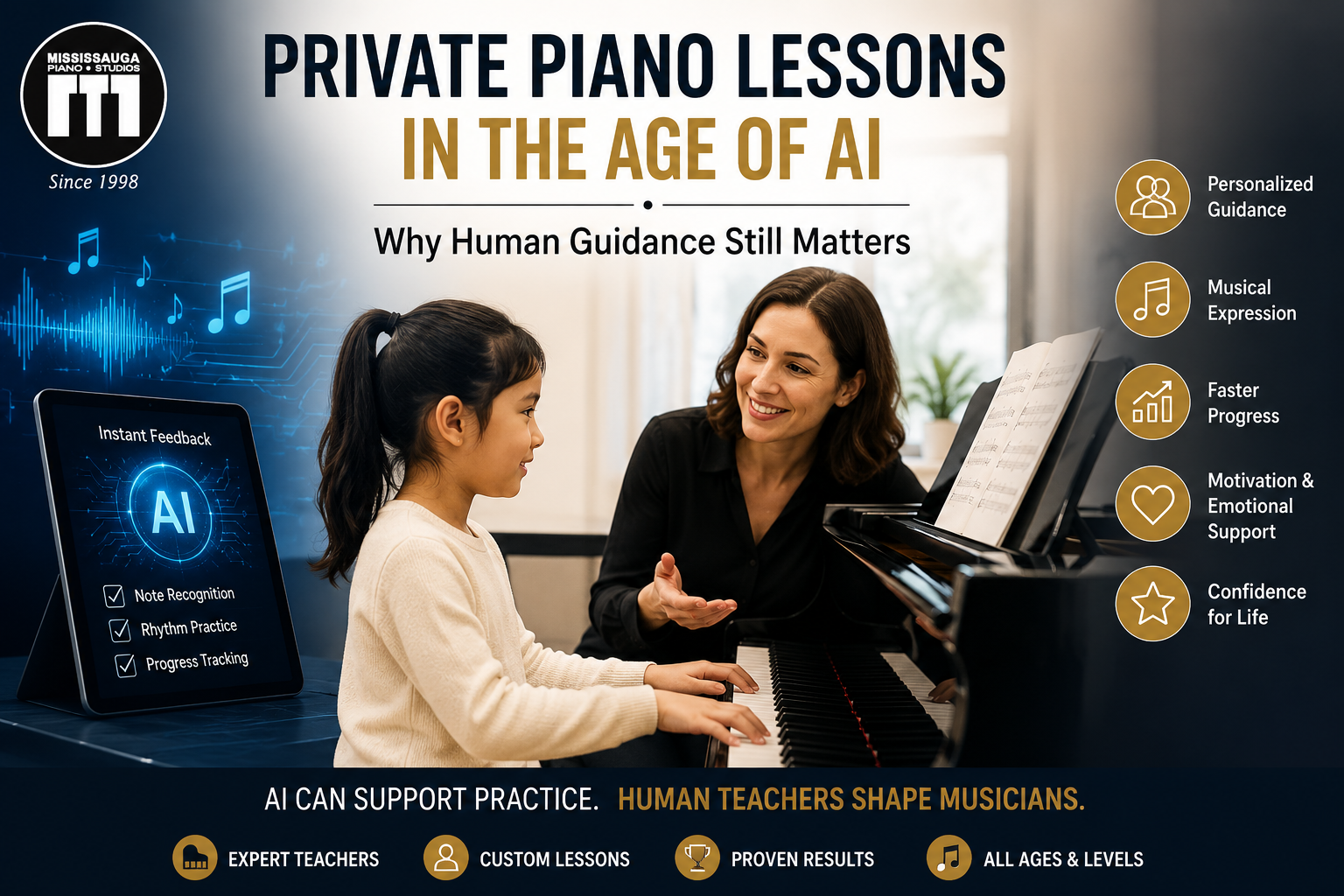
AI can help students practice piano, improve note recognition, and learn music theory concepts. Many AI Piano Learning tools provide instant feedback and structured exercises that support skill development. However, AI struggles to evaluate musical interpretation, emotional expression, and individual learning needs. Human Piano Instructor provides personalized guidance, adapts lessons to each student’s progress, and addresses subtle technical challenges that software often misses. While AI can be a useful supplement, it cannot replace the experience, mentorship, and artistic development that a skilled piano teacher provides.
Key Highlights
- AI is helpful for supplemental practice and routine exercises.
- Human teachers provide personalized feedback and instruction.
- Musical interpretation requires human insight and experience.
- Private lessons adapt to individual goals and learning styles.
- Motivation improves through accountability and encouragement.
- Performance skills develop faster with expert coaching.
- AI cannot fully replicate emotional support.
- Combining technology with professional instruction offers the best results.
What AI Piano Learning Does Well?
Modern Piano Learning Platforms have made piano education more accessible than ever. Students can learn basic concepts from home, follow structured lessons, and track their progress through interactive software. Many platforms include note recognition, rhythm exercises, and practice reminders that help learners build consistent habits.
Benefits of AI-Powered Piano Learning
AI Piano Learning can be especially useful for beginners who want flexibility and immediate feedback. Students can practice at their own pace and revisit lessons whenever needed. Some platforms also offer affordability compared to traditional lesson schedules.
Limitations of AI Piano Learning
Despite these advantages, AI remains a tool rather than a complete teaching solution. It excels at repetition, theory drills, and basic skill reinforcement, but it lacks the ability to understand individual learning challenges, musical goals, and artistic expression. As a result, AI serves best as a practice companion rather than a replacement for a qualified instructor.
Why Human Piano Teachers Still Matter?
Personalized Feedback Accelerates Progress
Every piano student learns in a different way. Some students quickly grasp rhythm but struggle with hand positioning, while others excel at reading music but need help developing technique. This is where Personalized Feedback becomes one of the greatest advantages of Private Piano Lessons.
An experienced piano teacher observes each student’s strengths and challenges in real time. They can adjust posture, correct finger placement, improve hand coordination, and address timing issues before they become long-term habits. This individualized attention helps students progress more efficiently and avoid common mistakes.
Customized Learning Paths also allow teachers to adapt lesson plans according to a student’s goals, interests, and pace. Rather than following a standardized program, students receive instruction tailored to their unique needs. This flexibility often leads to greater confidence, faster improvement, and a more rewarding learning experience.
Human Teachers Build Musical Interpretation Skills
Learning piano involves much more than pressing the correct keys. Great performances communicate emotion, tell a story, and create meaningful connections with listeners. Developing these skills requires Musical Interpretation, which remains one of the areas where human instruction provides exceptional value.
A skilled Piano Teacher helps students understand dynamics, phrasing, articulation, and emotional expression. They explain how different musical styles require different approaches and guide students through artistic decision-making.
AI can evaluate whether notes are played correctly, but it cannot fully teach the emotional nuances that bring music to life. Human guidance helps students move beyond technical accuracy and develop genuine musicality. This ability to shape expressive performances is one of the most important reasons why human instruction remains essential.
Emotional Support Improves Learning Outcomes
Every student encounters challenges while learning piano. Difficult pieces, slow progress, and performance anxiety can create frustration and reduce motivation. During these moments, Emotional Support in Learning becomes extremely important.
Human Piano Instruction provides encouragement, reassurance, and constructive feedback that helps students overcome obstacles. Teachers celebrate achievements, identify areas for improvement, and help students maintain realistic expectations throughout their learning journey.
Strong student-teacher relationships also promote accountability and long-term commitment. When students feel supported and understood, they are more likely to continue practicing and pursuing their goals. This human connection plays a significant role in building confidence and fostering a lifelong appreciation for music.
Advanced Piano Techniques Require Expert Coaching
As students advance, piano playing becomes increasingly complex. Techniques such as pedaling, tone production, hand independence, and intricate rhythm patterns require careful instruction and ongoing refinement. While AI tools can identify certain errors, they often struggle to detect subtle technical issues that affect performance quality.
Experienced teachers provide hands-on guidance for Advanced Piano Techniques and help students develop efficient practice habits. They can identify tension, correct movement patterns, and demonstrate techniques that improve control and expression. This level of expertise is especially important for students preparing challenging repertoire or pursuing advanced Piano Performance Skills.
By receiving personalized coaching, students build stronger technical foundations and reduce the risk of developing habits that may limit future progress.
One-to-One Piano Lessons Adapt to Individual Goals
Every student begins piano lessons with different objectives. Some want to play for personal enjoyment, while others prepare for conservatory auditions, examinations, recitals, or competitions. One-to-One Piano Lessons allow instruction to align with these individual goals.
A teacher can customize repertoire, lesson pacing, and skill development strategies according to a student’s interests and aspirations. Some students may focus on classical music, while others prefer contemporary styles or popular songs. This flexibility is one of the greatest strengths of quality Piano Education.
Unlike standardized AI programs, private lessons evolve as students grow. The learning experience remains relevant, engaging, and tailored to each individual’s musical journey.
AI Cannot Fully Evaluate Live Performance Skills
Performing music involves far more than technical accuracy. Students must learn stage presence, audience engagement, confidence, and emotional communication. These essential Piano Performance Skills are difficult for technology to assess effectively.
Teachers observe students during recitals, mock performances, and lesson demonstrations. They identify nervous habits, posture concerns, and performance weaknesses that software may overlook. They also provide strategies for managing stage anxiety and building confidence under pressure.
A Piano Teacher helps students prepare for real-world musical situations by offering practical feedback based on human observation. This guidance plays a significant role in helping students become confident performers rather than simply competent players.
The Best Approach Combines Technology and Human Instruction
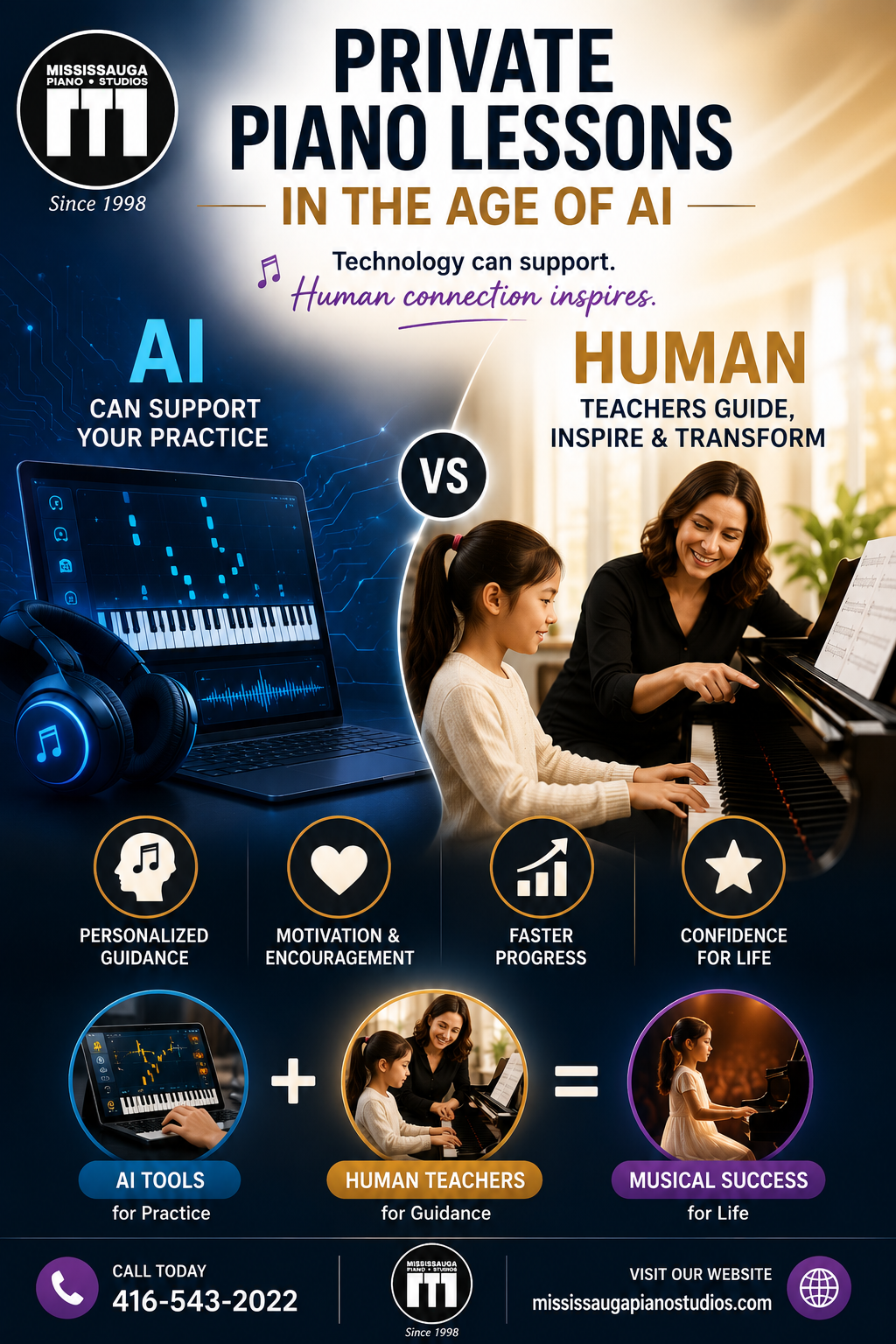
The debate between AI and traditional lessons does not have to be an either-or decision. In many cases, students achieve the best results by combining both approaches.
AI Piano Learning tools can support daily practice, reinforce theory concepts, and provide progress tracking between lessons. At the same time, Human Piano Instruction delivers personalized feedback, motivation, artistic development, and technical coaching.
This hybrid model allows students to benefit from technology while maintaining the advantages of expert instruction. Teachers can recommend appropriate tools, monitor progress, and ensure students use technology effectively. Together, AI and human guidance create a balanced and efficient learning experience that supports long-term success.
Why Families Continue Choosing Private Piano Lessons
Despite advances in technology, many families continue choosing Private Piano Lessons because they offer lasting educational value. Students benefit from structured learning, consistent progress monitoring, and individualized attention that adapts to their needs.
The Benefits of Private Piano Lessons extend beyond music itself. Students develop discipline, focus, confidence, and problem-solving skills that support success in other areas of life. Teachers also create meaningful relationships that encourage accountability and long-term growth.
For many families, these personal connections and educational advantages make private instruction an investment that continues to deliver value for years.
Choosing the Right Piano Teacher in Mississauga
Finding the right instructor can significantly influence a student’s learning experience. When evaluating Piano Lessons in Mississauga, students and parents should consider teaching experience, communication style, lesson structure, and the teacher’s ability to adapt instruction to individual goals.
A strong teacher creates a supportive environment that encourages progress while making learning enjoyable. Performance opportunities, examination preparation, and personalized lesson planning can also contribute to a more rewarding experience.
Choosing an instructor who understands a student’s goals and aspirations helps establish a strong foundation for long-term success and enjoyment in music.
Conclusion
AI Piano Learning has introduced exciting opportunities for students to access music education in flexible and convenient ways. However, technology cannot fully replace the value of Personalized Feedback, Musical Interpretation, and Emotional Support in Learning. Human instructors play a critical role in developing technique, confidence, creativity, and Piano Performance Skills.
Students seeking Private Piano Lessons gain personalized guidance that adapts to their goals and learning style. For those exploring piano lessons in Mississauga, working with experienced instructors can make a meaningful difference in long-term progress. At Mississauga Piano Studios, students receive professional instruction, individualized support, and a learning experience designed to foster musical growth. The most effective path forward combines innovative technology with expert human guidance to create confident, well-rounded musicians.
FAQ
Can AI replace a piano teacher?
AI can support practice and theory learning, but it cannot fully replace personalized instruction, musical interpretation, motivation, and mentorship from a teacher.
Are AI piano lessons effective for beginners?
Yes. AI lessons help beginners learn basic skills, note recognition, and practice routines, but teacher guidance remains valuable for progress.
What are the benefits of private piano lessons?
Private lessons provide individualized instruction, personalized feedback, accountability, skill development, and a customized learning experience based on student goals.
How does a piano teacher provide personalized feedback?
Teachers observe technique, posture, rhythm, and performance habits, then adjust instruction to address each student's unique strengths and challenges.
Can AI help improve piano practice?
Yes. AI tools can track progress, provide reminders, reinforce concepts, and support consistent practice between lessons.
Why is musical interpretation important?
Musical interpretation helps performers communicate emotion, create expression, and transform technically correct playing into engaging musical performances.
Do children learn better with private piano lessons?
Many children benefit from private lessons because teachers provide structure, encouragement, accountability, and age-appropriate learning strategies.
What advanced techniques require human instruction?
Pedaling, tone production, phrasing, hand coordination, and complex repertoire often require expert coaching and personalized correction.
How do piano teachers motivate students?
Teachers set goals, celebrate progress, provide encouragement, and help students overcome challenges that may affect confidence and motivation.
Should I combine AI learning tools with piano lessons?
Yes. Combining AI tools with professional instruction often creates a balanced approach that supports practice, feedback, and long-term growth.